



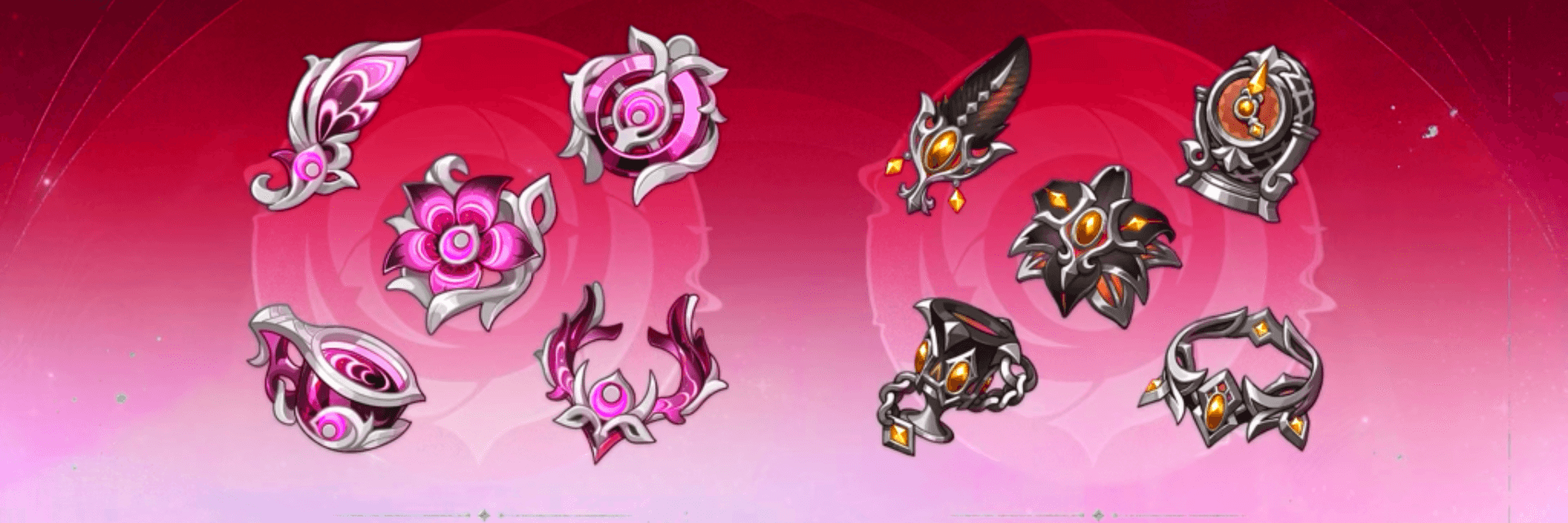
In 2025, the landscape of artifact farming in Genshin Impact has transformed dramatically. What was once a painful grind of luck and frustration has evolved into a more calculated, skill-based process that rewards knowledge, patience, and efficient resource management. Thanks to the introduction of mechanics like Frost, Feathers, and the visible third substat, players now have more control than ever over how they build their characters though challenges and limitations still remain.
The artifact system, one of the cornerstones of character progression, has always been a delicate balance between RNG (random number generation) and player strategy. In the early years of Genshin, farming perfect pieces felt almost impossible; five star artifacts with optimal substats were rare treasures. Today, however, veteran players can strategically manipulate RNG to increase their chances of getting desirable stats. This shift has transformed artifact farming from pure luck into a semi calculated grind, though elements of chance still play a major role.
The Relic System and Artifact Sets
The Relicarium (or Relic crafting system) remains one of the most powerful features for late game players. By recycling unwanted five star artifacts, it allows you to reroll specific sets like Golden Troupe or Obsidian. The RNG mechanics of the Relicarium mirror those of the domains meaning you’re still relying on probability but the system now offers a sustainable way to convert excess inventory into potentially perfect pieces. This, combined with Frost and Feathers, gives dedicated players tools to achieve precise builds previously thought impossible.
When choosing which sets to farm, prioritize characters’ best-in-slot bonuses. For example, the Golden Troupe remains essential for off-field DPS characters, while the Obsidian Set dominates in hybrid builds. However, even with optimal domains, success still depends heavily on understanding substat quality, role value, and upgrade potential.
Understanding Substats, Roles, and Upgrade Patterns
Artifacts have four rarity tiers of substats from the lowest rolls to the highest. Critical Rate, for instance, ranges from 2.7% to 3.9% per roll, while Critical Damage can go from 5.4% up to 7.8%. The difference may seem small, but these values compound over time. A piece that rolls 3.9% Critical Rate four times totals 15.6%, while one that starts with 2.7% only reaches 10.8%. That’s nearly a full extra roll’s worth of stats lost just from weaker base values.
For this reason, players should always prioritize artifacts that start with four substats and contain at least two high value rolls in their desired attributes. Artifacts that begin with three substats are inherently weaker because they gain only four total upgrades instead of five. Even though the third substat visibility feature helps players make informed decisions, it’s still crucial to evaluate stat ranges and roll efficiency before committing resources.
The upgrade process itself follows a predictable structure: substats roll at levels 4, 8, 12, 16, and 20. While the RNG distribution can’t be directly manipulated, positioning key substats higher on the list (especially when using Frost crafting) has been observed to improve the probability of receiving upgrades on them. Though not guaranteed, it’s a technique that experienced players use when optimizing high-end builds.
The Frost System: Controlled RNG at a Cost
The Frost mechanic lets players specifically target one artifact slot typically the most elusive ones, like Goblets by consuming rare Frost resources. In theory, this system offers a shortcut to achieving ideal pieces for key characters such as Skirk or Columbina. In practice, however, its cost and unpredictability make it best suited for endgame refinement rather than general use. Frosts should only be spent when:
A new set is released for a freshly launched character.
You’re missing a single critical piece (like a Cryo Damage Goblet).
You’ve exhausted all domain farming alternatives.
Using Frost to chase perfection often leads to disappointment the RNG factor still dominates, and even high level players report wasting dozens of Frosts for minimal gains. The best practice is to use them strategically, not emotionally, and always for essential stats like Elemental Damage or Crit combinations that define your build’s functionality.
Feather Mechanics and the Pay-to-Win Dilemma
Feathers, another modern innovation, act as RNG modifiers for artifact upgrades. Each time a player enhances an artifact using Feathers, the progress circle fills slightly. Once it glows, the next enhancement is guaranteed to produce three favorable rolls. However, until the circle is full, the upgrades remain partially randomized a detail many players initially misunderstood due to unclear in-game explanations.
This system introduces an element of control, but also controversy. High-tier Feathers, available through premium battle passes or limited events, provide advantages that lean toward pay to win. The most efficient strategy is to reserve your guaranteed Feather upgrades for the hardest to roll artifacts: Goblets with desired elemental bonuses or Circlets with critical stats. Lower tier items like Flowers and Feathers of Life should rarely consume these precious resources.
Maximizing Efficiency with Substat Strategy
For consistent progress, players should follow a clear hierarchy:
Four-substat artifacts first. Always prioritize these; their fifth roll potential outclasses any three substat alternative.
High-range rolls only. Avoid substats with minimal starting values; over time, the difference becomes enormous.
Selective upgrades. Use enhancement resources sparingly on items that meet ideal conditions before level 4.
Recycle wisely. Feed five star rejects into the Relicarium to recycle and target specific sets instead of randomizing endlessly.
The Future of Artifact Optimization
With every update, Hoyoverse has subtly pushed Genshin’s artifact system toward a semi deterministic model one that rewards experience and planning. While some features like paid Feathers raise concerns, the overall trend favors smarter, data-driven progression. Communities now share detailed substat charts, probability tables, and even machine learning predictions to forecast artifact outcomes, turning what was once an infuriating grind into a near scientific pursuit.
Yet, despite all these innovations, the core truth remains: perfection is still a matter of patience and probability. No system, no matter how advanced, can completely eliminate RNG. What players can do is learn, adapt, and use every available tool from substat analysis to resource timing to make the most of every roll.
For veterans and newcomers alike, mastering artifacts in 2025 isn’t just about farming domains anymore. It’s about understanding systems, reading numbers, and learning when not to spend your resources. With these tools, the dream of building truly “perfect” characters is closer than ever if you have the patience to get there.