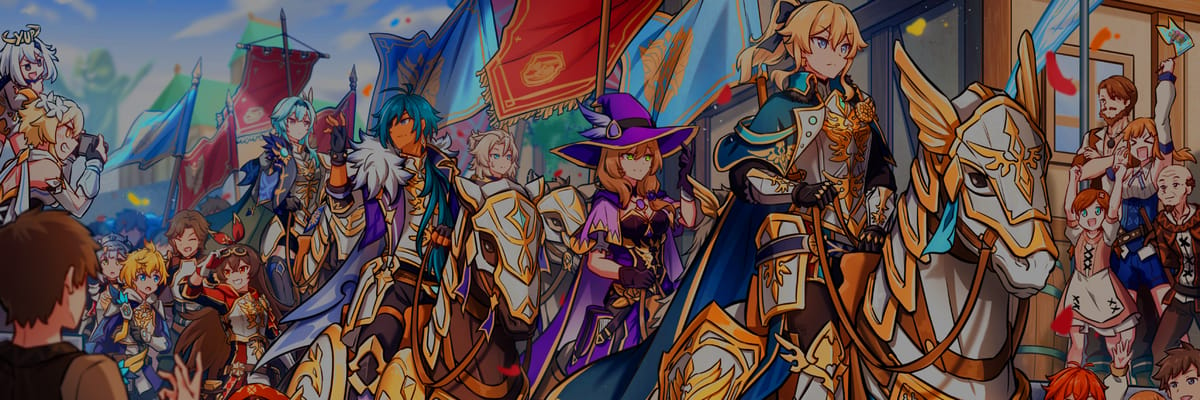
A fresh Genshin Impact 6.3 leak has brought attention to an unreleased Knights of Favonius hymn, a lyrical piece believed to be connected to internal game files, beta text, or unused narrative assets. The hymn, centered on themes of battle, freedom, and Mondstadt’s eternal spirit, appears to function as both a ceremonial song and a symbolic retelling of the nation’s ideological foundations.
The leaked hymn opens with an invitation to dance beneath the night sky, a recurring motif in Mondstadt lore. Dancing before battle reflects an old tradition of embracing joy even in the face of death, reinforcing the belief that freedom is worth defending through both song and sacrifice. The call to dance before marching into battle for Mondstadt suggests a ritual meant to strengthen resolve rather than glorify violence.
Repeated references to morning and tomorrow emphasize courage as a necessity rather than a choice. According to the hymn, courage is required to face the coming dawn, yet freedom remains a holy virtue that transcends fear. This language aligns closely with Mondstadt’s historical rejection of tyranny, especially during the era of the Storm Tyrant and the birth of Barbatos’ ideals.
The hymn continues by invoking the moon as a witness, calling companions to dance beneath it before war. Mentions of North and South and dandelion, also known as lionfang, connect the song directly to the Knights of Favonius identity. The dandelion has long symbolized perseverance and freedom, and its inclusion reinforces the idea that every battle fought by the Knights is rooted in protecting these values rather than expanding power.
One of the most striking elements of the leaked hymn is its clear opposition to tyranny and authority abused through power. Rather than naming a specific enemy, the lyrics speak broadly of letting tyranny drift away, suggesting that Mondstadt’s true enemy is not a nation or god, but oppression itself. The line referencing blood and peace implies an understanding that peace is often purchased through sacrifice, a theme echoed throughout Mondstadt’s ancient rebellions.
The hymn explicitly identifies its singers as children of wind, born free, who belong to a shared choir. This metaphor reinforces the communal nature of freedom in Mondstadt. Freedom is not individualistic isolation, but a shared harmony, where every voice matters. Leaks analysts believe this language may connect to early bardic traditions and even to the unnamed bard whose sacrifice shaped Mondstadt’s fate.
Another critical verse speaks of tyrannical shackles finally fleeing, reinforcing the cyclical nature of Mondstadt’s history. Even if freedom is achieved, it must be defended again and again. The hymn positions the Knights of Favonius not as rulers, but as guardians who rise when chains return and step back once freedom is secure.
The line stating that rulership comes and goes with the tides of time is particularly revealing. It suggests an awareness that no authority, mortal or divine, is eternal. In contrast, Mondstadt itself is described as eternally present on the firmament, also referred to as the welkin. This implies that Mondstadt’s existence is bound to ideals rather than governance, reinforcing its role as a spiritual constant rather than a political power.
The final verses return to the image of a last dance, performed until the falcon flies in the morning light. The falcon, a symbol often associated with vigilance and freedom, represents hope carried into the dawn. Ending the hymn on this image frames battle not as an end, but as a transition toward renewal.
From a leaks perspective, this hymn is significant because it may indicate upcoming story scenes, ceremonial events, or background lore expansions tied to the Knights of Favonius in Version 6.3. Its poetic structure and ideological clarity suggest it was written with narrative intent rather than as a simple flavor text.
As with all Genshin Impact 6.3 beta leaks, this content remains unofficial and subject to revision. However, the hymn’s alignment with Mondstadt’s core themes strongly suggests it will play a role in reinforcing the nation’s identity during future story developments.